


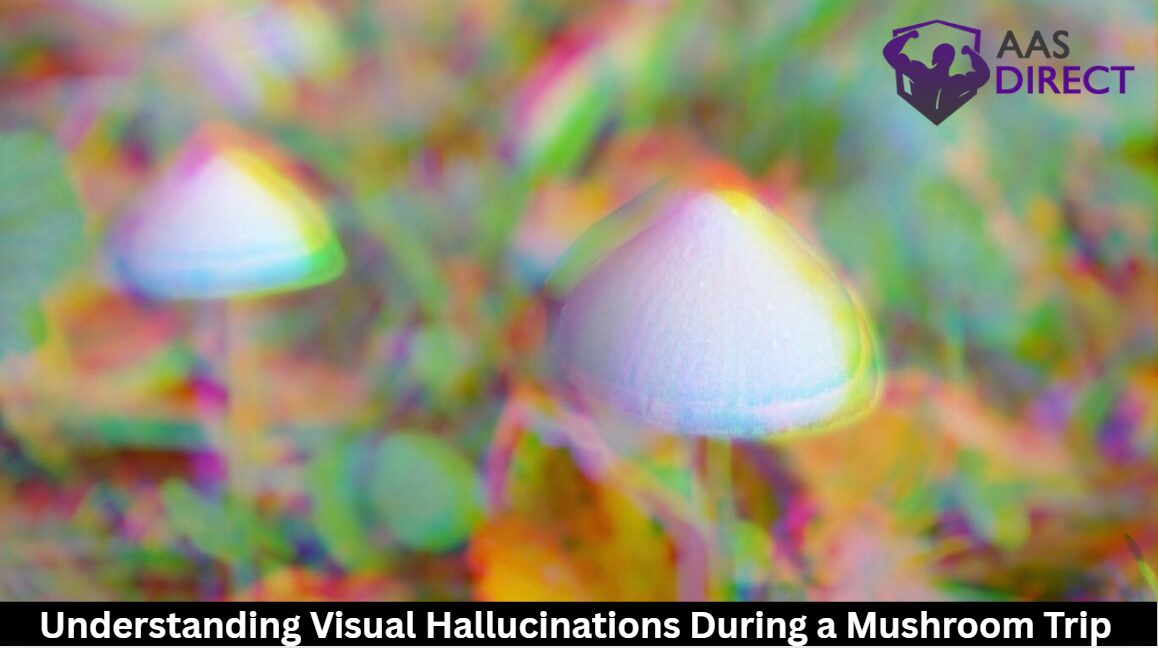
When you consume psilocybin mushrooms, you’ll experience visual hallucinations that range from subtle shifts in color perception to complex geometric patterns that seem to dance across your field of vision. These effects occur because psilocin targets serotonin receptors in your visual cortex, creating altered communication between brain regions.
You’ll typically notice initial changes within 30-60 minutes, with peak visuals lasting 2-3 hours, depending on your dose and individual brain chemistry. Understanding these mechanisms can help you navigate the experience more confidently.
What Psilocybin Visual Hallucinations Actually Look Like
What exactly do you see when psilocybin takes hold of your visual system? Psilocybin mushrooms create distinctive visual hallucinations that range from subtle sensory distortion to profound perceptual shifts.
You’ll likely notice geometric patterns dancing across surfaces, fractals spiraling infinitely inward, and colors becoming impossibly vivid. Walls might appear to breathe or pulse rhythmically, while textures seem to flow like water. Light trails follow moving objects, creating ethereal streaks through your visual field.
Your set and setting greatly influence these manifestations. In nature, trees might shimmer with golden auras, while indoors, familiar objects transform into alien landscapes. During intense experiences approaching ego dissolution, closed-eye visuals can reveal symbolic imagery and kaleidoscopic mandalas.
These hallucinations aren’t random. They reflect your brain’s altered processing, creating a unique visual language that feels both foreign and deeply meaningful.
Why Mushrooms Create These Visual Effects
When psilocybin enters your system, it undergoes a rapid transformation into psilocin, the compound responsible for hijacking your brain’s visual processing centers. This molecule specifically targets your serotonin receptors, particularly the 5-HT2A variety, which cluster heavily in your visual cortex.
Once activated, these receptors trigger unprecedented communication between brain regions that typically operate independently. Your visual cortex begins processing information differently, creating the signature geometry patterns and morphing surfaces you’ll experience. This altered perception stems from your brain’s inability to filter sensory input normally.
Your mindset also plays a significant role, as expectations can amplify or diminish visual intensity. The result is a complete reorganization of how your brain interprets visual information, producing the kaleidoscopic reality characteristic of psilocybin experiences.
Timeline: When Visuals Start, Peak, and Fade
Thirty to sixty minutes after consuming psilocybin mushrooms, you’ll notice the first subtle shifts in your visual perception. Colors become slightly more vibrant, and surfaces appear to breathe gently. These initial visual hallucinations gradually intensify over the next hour, reaching their peak between two and three hours post-consumption.
During peak effects, you might experience intense geometric patterns, significant color enhancement, and profound time distortion that makes minutes feel like hours. Your dose sensitivity directly influences both intensity and duration. Higher doses create more pronounced visuals lasting up to six hours total.
An anxiety response can amplify these effects, making visuals feel overwhelming. The experience gradually diminishes after four hours, with most visual effects completely fading by the six-to-eight-hour mark.

What Makes Visuals Stronger or Weaker?
Understanding this timeline helps you recognize that multiple factors can greatly alter your visual experience’s intensity. Your dose sensitivity plays the primary role. Higher amounts typically produce more vivid visual hallucinations, though potency varies between mushroom strains and batches.
Set and setting greatly influence your psychedelic experience. A positive mindset and comfortable environment often enhance visuals, while anxiety or chaotic surroundings can intensify them overwhelmingly. Your expectations also matter. Anticipating strong effects sometimes amplifies them.
Your mental state and surroundings can either amplify psychedelic visuals beautifully or create overwhelming intensity. Preparation matters immensely.
Individual brain chemistry affects how you process psilocin. Previous psychedelic use, medications, and natural serotonin receptor sensitivity all impact intensity. Environmental factors like lighting, music, and social dynamics can either heighten or diminish effects.
Understanding these variables helps during your integration process, allowing you to better prepare for future experiences and recognize what influenced your particular visual journey.
How to Stay Safe During Intense Visual Experiences
Since intense visual hallucinations can sometimes feel overwhelming, having practical safety strategies becomes crucial for steering through challenging moments during your trip. When psilocin activates your 5-HT2A receptors, the resulting color enhancement and visual distortions can become disorienting.
Basic harm reduction starts with controlling your environment. Dim harsh lighting that might amplify visuals, and avoid mirrors or complex patterns if they’re causing distress. Keep a trusted sober sitter nearby who can provide reassurance and guarantee your physical safety. Practice grounding techniques like focusing on your breath or touching familiar objects.
Remember that these effects are temporary, typically lasting 4-6 hours. If you’re feeling overwhelmed, remind yourself that the experience will pass. Stay hydrated, remain in a safe space, and avoid making important decisions while under psilocin’s influence.