


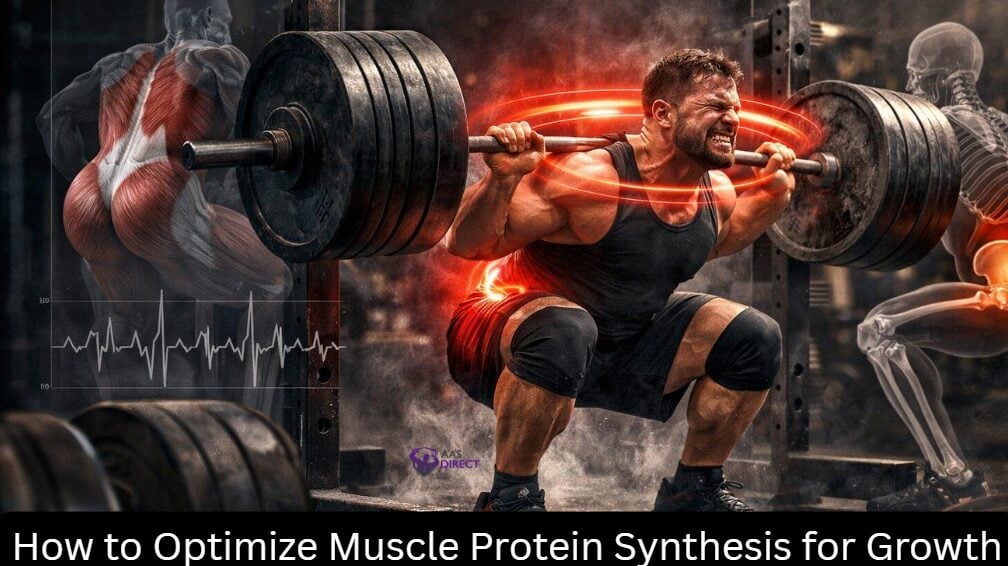
To get the most out of muscle protein synthesis for growth, you need to do a few key things consistently. Every day, you should eat three to five meals that contain 0.7 to 1 gram of protein per pound of body weight. To get the strongest adaptive signals, you should focus on compound resistance training with progressive overload. To help your body heal, you’ll also need enough food, good sleep, and stress management.
What Is Muscle Protein Synthesis and Why It Matters?
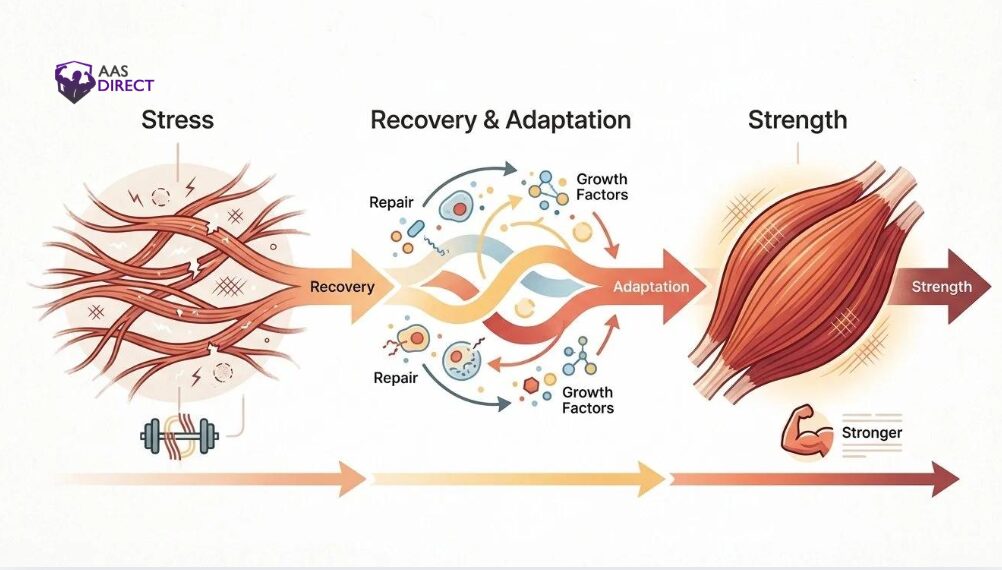
At the heart of every meaningful talk about muscle growth is muscle protein synthesis, the biological process your body uses to make new muscle proteins. That’s how your body fixes and builds back up muscle tissue that strength training has broken down. But synthesis by itself doesn’t mean growth will happen. Because your body is always building and breaking down muscle, what matters is whether synthesis consistently exceeds breakdown over time.
The amino acids that come from the protein you eat are the building blocks, and healing gives your body the time it needs to use them properly. When you understand this balance, you can stop looking for easy ways to get things done and start making habits that will help you adapt in a real way that lasts. Growth doesn’t happen all at once; you have to keep working at it.
How Much Protein Do You Actually Need to Build Muscle?
Once you know that consistently shifting the balance toward synthesis is necessary for muscle growth, the next question that comes to mind is how much protein helps that process. Research shows that most people who want to gain muscle should eat about 0.7 to 1 gram of protein per pound of fat every day. The total amount of protein you get every day is much more important than any one meal or supplement.
Being able to use a certain number of amino acids at once is why it’s better to eat three to five meals with protein than to eat a lot of protein all at once. You’ll also need to eat enough calories to help you train and heal. It’s hard for your body to build and keep muscle over time if you don’t eat enough protein while running a big calorie deficit.
Time Your Nutrition to Maximize Muscle Protein Synthesis
The most important thing is how much protein you eat every day, but when you eat can still help your results as a secondary plan. If you eat every three to five hours instead of all at once, your body will be able to keep up muscle protein synthesis all day.
Each meal should have 30 to 40 grams of quality protein, which is usually enough leucine to cause a real anabolic response.
You don’t have to eat right away after a workout, but eating within a few hours keeps your healing on track. It’s best for protein timing to add to your daily protein intake instead of taking its place as the most important thing.
Don’t worry too much about the time. First, make sure you have regular meal times. Then, change the times to fit your schedule and training needs.
The Workouts That Spike Muscle Protein Synthesis Most
The best way to start muscle protein synthesis is with resistance exercise, but not all workouts do the same thing. Squats, deadlifts, and rows are examples of compound movements that, when combined with greater weights, employ more skeletal muscle mass and, as a result, transmit a stronger adaptation signal than isolation training alone.
More sets and reps per session, which is what higher training volume means, tends to boost synthesis more than low-volume methods, but only when recovery can keep up with the demand.
The main long-term cause is still progressive overload. Your skeletal muscles will keep adjusting instead of stopping when you slowly increase the weight, reps, or difficulty. As with resistance training, doing sets close to failure seems to boost the hormonal signal the most. But chasing intensity without taking care of fatigue can slow down recovery and stop the response you’re trying to make.

How Sleep and Recovery Drive Muscle Growth
The best way to start muscle protein synthesis is with resistance exercise, but not all workouts do the same thing. Lifting heavier weights with compound movements uses more skeletal muscle mass, sending a stronger adaptive signal than isolation workouts alone. More sets and reps per session, which is what higher training volume means, tends to boost synthesis more than low-volume methods, but only when recovery can keep up with the demand.
The main long-term cause is still progressive overload. Your skeletal muscles will keep adjusting instead of stopping when you slowly increase the weight, reps, or difficulty.
As with resistance training, doing sets close to failure seems to boost the hormonal signal the most. But chasing intensity without taking care of fatigue can slow down recovery and stop the response you’re trying to make.