


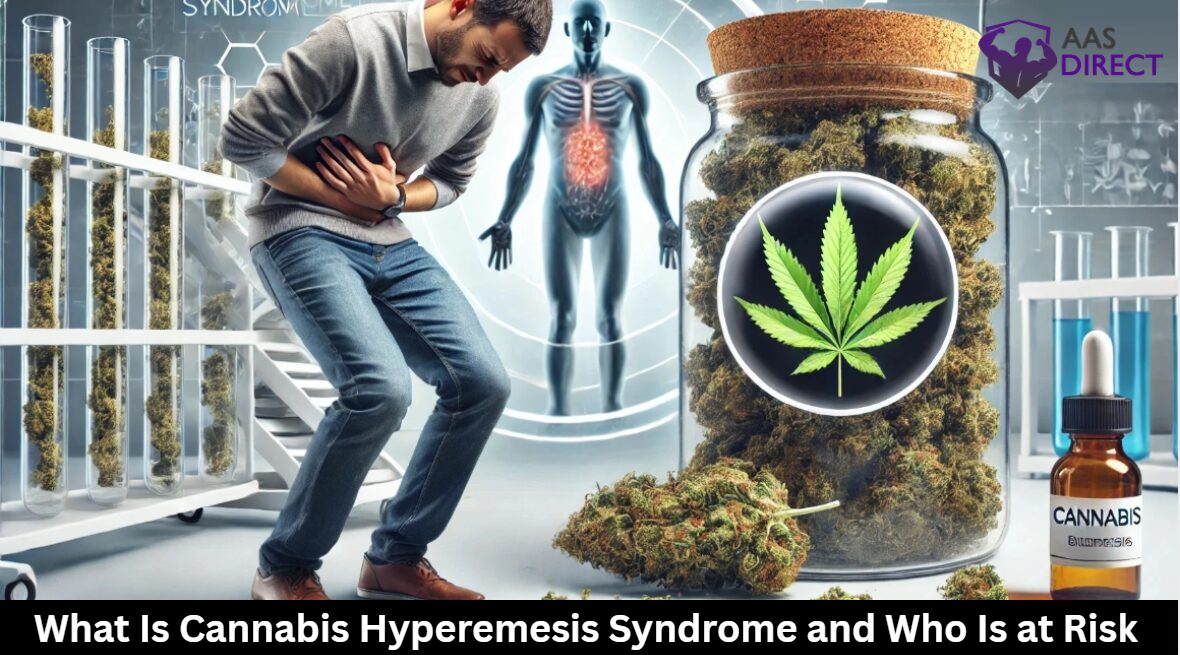
Cannabis hyperemesis syndrome (CHS) is a condition you can develop after years of heavy cannabis use, and it causes severe, recurring bouts of nausea and vomiting that won’t stop until you quit using cannabis entirely. It seems contradictory since cannabis is known for its anti-nausea properties, but chronic use can actually dysregulate your endocannabinoid system. You’re most at risk if you’re a heavy, long-term user of high-potency products.
What Exactly Is Cannabis Hyperemesis Syndrome?
Cannabis Hyperemesis Syndrome, or CHS, is a condition in which heavy cannabis use over a long period of time causes severe nausea, vomiting, and abdominal pain that come and go. It seems to go against cannabis’s well-known anti-nausea qualities. Your endocannabinoid system can become out of balance over time if you use weed often.
Researchers think that long-term exposure changes how cannabinoid receptors work, which in turn hurts digestive control instead of helping it. Because of this problem, the person will have cycles of puking that can be very painful and hard to handle without medical help.
Chronic weed use over months or years is what leads to CHS. Occasional use doesn’t cause it. It’s also a diagnosis of exclusion, which means that doctors have to rule out other stomach problems before they can confirm it.

Why Does Cannabis Cause Vomiting in Some Users?
People who use the same plant often to stop feeling sick can also start throwing up badly. It is because of how the endocannabinoid system reacts to long-term contact.
Cannabinoid receptors in your digestive system can become less sensitive over time if you use weed regularly. It can stop your gut from moving and communicating normally. The system starts to work incorrectly instead of stopping the sickness and vomiting.
Chronic use also seems to change how your brain and gut talk to each other, which leads to a paradoxical toxic reaction where cannabis stops working as expected to make you feel less sick. Because each person’s biology is different, this situation doesn’t happen to all long-term users.
How well cannabis helps or hurts your digestive system depends a lot on your specific receptor sensitivity and past exposure.

How Do Doctors Diagnose Cannabis Hyperemesis Syndrome?
There isn’t a single test that can prove CHS, so doctors use a combination of your medical history, how often you use cannabis, and rule out other gastrointestinal conditions to make the diagnosis. It’s a clinical diagnosis, which means that your doctor will look at your CHS symptoms, how long you’ve used cannabis, and other conditions like Crohn’s disease or gastroparesis first.
The doctor needs to know if you’ve ever needed emergency care because you were severely sick and dehydrated. Telling lies about your cannabis use will make it take longer to get a correct evaluation.
After ruling out other reasons and confirming that your symptoms are consistent with CHS, your doctor will focus on managing your symptoms and guiding you toward the most effective treatment, which is completely giving up cannabis.

Who Is Most at Risk for Developing CHS?
Once your doctor has a clearer picture of your symptom history and cannabis use, the next logical question becomes: who’s actually likely to develop CHS in the first place?
You’re at higher risk if you’ve used cannabis heavily for several years. Long-term, frequent use appears to dysregulate your endocannabinoid system, triggering recurring nausea episodes, abdominal pain, and digestive distress. High-potency products increase that risk further.
If you’ve noticed that hot showers temporarily relieve your symptoms, that’s a notable indicator. It suggests your body’s thermal regulation is responding in ways consistent with CHS.
You’re also more vulnerable if you experience withdrawal effects when stopping use or if you’ve had cyclical vomiting patterns before. Individual biology plays a role, but chronic exposure remains the clearest risk factor.
The Only Proven Treatment for CHS
If you have CHS, there is only one thing that can really help: you have to stop using weed completely. If you keep using cannabis, no amount of medicine, food change, or lifestyle change will get rid of CHS. Because the disease is linked to long-term cannabinoid exposure, reducing the amount rarely leads to long-lasting relief.
Symptoms don’t go away right away after you stop. It takes time to get better, and during acute cases, you may need supportive medical care, such as IV fluids to treat dehydration and electrolyte imbalances. Hot showers might help with pain for a short time, but they’re not a cure.
Reversing CHS is a good thing to know. Most people feel a big difference in their symptoms within a few weeks of quitting for good. Your body can get better, but only if you stop using weed for good.