


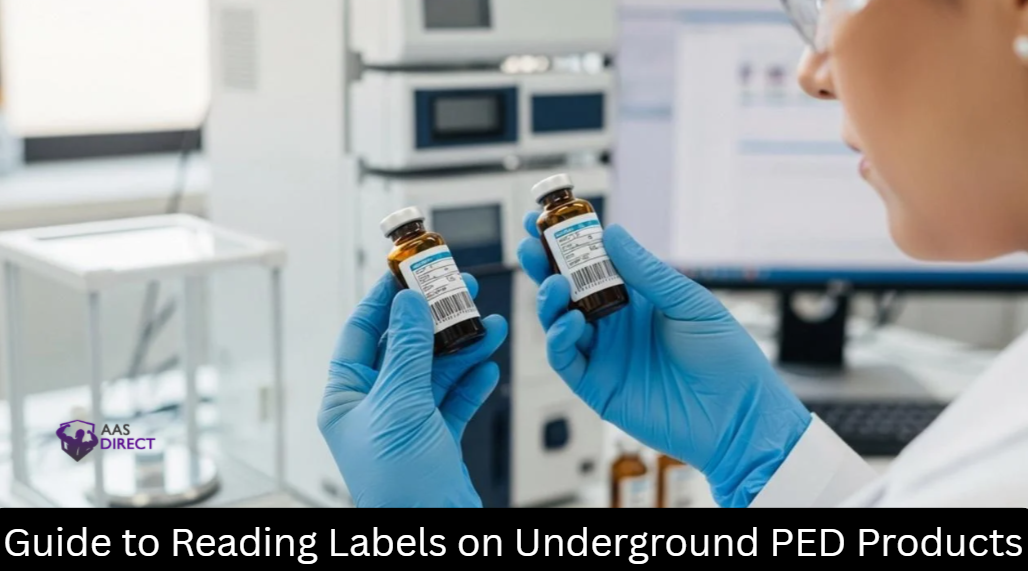
You can’t just take what illegal PED labels say at face value. It is not always possible to verify dosage claims, batch numbers are missing, and bad print quality can be a sign of sloppy production. To make sure you know what’s really in a product, you should compare labels to third-party databases and user-generated test logs. If you don’t have separate lab tests, you’re just guessing. You’re about to learn a lot more about how to avoid buying fake or mislabeled UGL goods.
What UGL Labels Actually Tell You And What They Hide
Since there are no rules over product labeling in the UGL space, fake goods can look almost exactly like real ones. There are problems with sterility, concentrations that are labeled wrong, and substituted substances that you can’t tell just by reading the packaging. What a label doesn’t show is often more important than what it does, and you need to know this before you can seriously judge any hidden product.
Decoding Dosage Claims on Underground PED Labels
Labels for underground PEDs that say how much to take are some of the easiest things to fake and hardest to check without doing your own tests. There is nothing more to read on a label that lists a specific dosage concentration than a number. Products from underground labs aren’t subject to manufacturing standards that make sure the active ingredients listed on the packaging are what they say they are.
Labels may say 250 mg/mL, but there’s no way to know for sure if they’re accurate without third-party testing. Tolerance levels can vary a lot above or below the stated amount, which can impact both safety and effectiveness. Variability is not only possible when there is poor quality control during production; it’s also very common. If an underground label says something about a dose, don’t believe it until an outside study says otherwise.
Red Flags That Identify a Mislabeled or Counterfeit UGL Product
Even though it’s not always easy to spot a fake or mislabeled UGL product, some signs can help. When looking at performance-enhancing drugs from secret labs, keep an eye out for spelling mistakes, bad print quality, or packing that changes a lot from one order to the next. These common warning signs often mean that the manufacturing standards aren’t reliable. If there are no batch numbers or expiration dates, there is no way to track the food, which makes it much harder to find and examine product contamination. Check out claims of extreme purity that don’t come with proof; label language alone can’t confirm genuine quality. It is a big problem that a business doesn’t want or accept third-party testing. Also, you should look at the packaging from different batches and see if there are big differences that show poor quality control. No amount of label detail, no matter how well done, can replace a verified, independent study of what’s really in the product.
How to Cross-Reference UGL Labels Against Third-Party Databases
The next step after finding possible red flags on a UGL label is to compare what’s written with third-party databases and testing tools that are available. Performance-enhancing drug communities often keep crowdsourced logs where users post third-party analysis results from verified labs. This lets you find specific underground labs and the drugs they make.
When you do a cross-reference, you should compare the batch numbers on your product to record test results for that batch. If there are no records, that fact alone tells us something. For example, Janoshik and other independent testing services post results that can help you spot fake PEDs or compounds that aren’t at the right amount. Additionally, you may send samples straight for testing. There is no way to replace actual chemical verification with a label claim, so using third-party data as your main evaluation tool is the more reliable method.
What Lab Testing Exposes That No UGL Label Ever Will
Lab testing shows what the label never could: the exact chemicals that are in the vial or pill. On packaging, underground labs can print whatever they want, but testing by an independent lab shows that isn’t true. It will check to see if the listed compound is present, find substances that weren’t reported, and compare the actual concentration to the dosage that was claimed.
When it comes to PED quality control, there is often a big difference between what the label says and what the actual contents are. Testing has shown that some products have the wrong compounds, harmful contaminants, and almost no active ingredients. These are safety issues that no written label will ever choose to talk about.
If you really want to judge a product, you have to do lab tests. They are the only way to get around the marketing layer that illegal labs use to move products without being held accountable.