



Sodium manipulation in the peak week will simply move water from under the skin to create a harder, more defined look. It won’t create conditioning that you don’t already have and it won’t replace fat loss. Sodium, water and carbohydrate intake are all part of one big system so changing one element in isolation can have a knock-on effect in terms of electrolyte balance and can result in a flat or ‘spilled over’ look. People respond in all sorts of different ways and extreme water cutting is very much a physiological risk. What follows is an explanation of how to deal with these variables in a safer and more effective manner.
What Peak Week Sodium Manipulation Is Really For
Getting rid of the mystique and peak week sodium manipulation is really only for one thing: to get water out from under the skin so that the muscle underneath looks harder under the stage lights. It is not a fat loss tool and it doesn’t in any way build conditioning that wasn’t there to begin with. Effective peak week sodium manipulation is simply one of the inputs you can tweak to get a certain level of fullness and tightness in a body that is already lean. It’s all about optimising the appearance over a very narrow period of time. It’s not about fixing a prep that has failed. Competitors who understand that distinction will be very conservative with their sodium changes, expecting only a very small degree of improvement in terms of appearance. Anyone who thinks sodium manipulation is going to save a soft or under conditioned physique is completely mistaken as to what it is for.

Why Sodium, Water, and Carbs Can’t Be Separated
Fluid regulation in the body is a system not a switch so you can’t manipulate sodium in isolation without there being some compensatory shift elsewhere. The interaction of sodium is with potassium, with water and with carbohydrate intake. Carbohydrate timing will affect glycogen stores and glycogen will draw water in, which will affect the intracellular fluid content and hence the fluid distribution independently of sodium intake. If you adjust one variable without taking the others into account you’re going to upset the balance of the electrolytes and you’re going to end up with the very opposite of what you’re looking for. That’s why the peak week myths that are based solely on sodium continue to exist despite the fact that they don’t work in any consistent way. Individual response will vary depending on training history, diet adherence and individual physiology so isolated sodium manipulation is not a reliable predictor of stage look.
How Flat and Spilled-Over Peak Week Looks Happen
Flat and spilled over are the two opposite ends of the same fluid management fail. Flat is the result of having gone too aggressively on the sodium, water and/or carbohydrate intake. You end up with depleted muscle glycogen and compromised intracellular fullness. The muscles look deflated rather than dense and the skin is just hanging loose over the muscle rather than wrapping it. Spilled over is the other extreme where you’ve gone too far on the sodium or fluid retention and the water’s actually pushed into the subcutaneous space. You lose the crisp separation and the muscles just look soft. Both are the result of having over-adjusted one of the variables that were already working during the prep. A lot of competitors will go into the peak week chasing that massive change and will simply get it wrong in terms of timing and magnitude. They will disrupt the balance that the body had already achieved. Neither flat nor spilled over is a reflection of poor conditioning at all. It’s just a reflection of poor peak week execution.
The Real Health Risks Behind Extreme Water Cuts
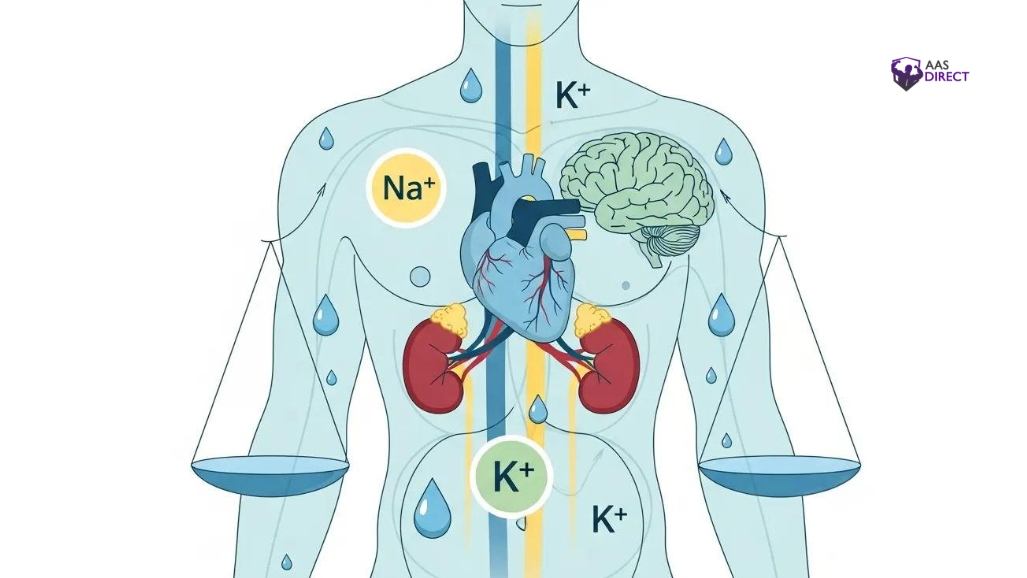
Beyond the obvious risk of a flat or spilled over stage look there’s a real physiological danger in aggressive water cutting. The dangers of dehydration go way beyond just the look. Sustained dehydration leads to reduced blood volume which in turn puts a strain on the cardiovascular system, impairs thermoregulation and compromises kidney function. Fluid loss will also disrupt the body’s electrolyte balance which in turn increases the risk of cramping, dizziness, confusion and dangerous arrhythmias. These are not hypotheticals. Competitors have in fact collapsed backstage and had to go to hospital as a result of extreme water cuts. The body needs fluid and electrolytes to regulate nerve impulse conduction and muscle contraction so manipulating them in that way without some kind of professional oversight is not just a risk of a bad callout. No placing justifies hospitalisation. This is a health issue as much as it is a strategy.
Why Dry Runs Beat Copying a Pro’s Peak Week
When a competitor just goes in and copies the pro’s peak week protocol wholesale they’re copying the outcome without copying the inputs that produced it. You can’t just replicate the inputs of that athlete (their training history, their sodium sensitivity, their hormonal environment, the years of trial and error) and expect to get the same result. Individual response to sodium, water and carbohydrate manipulation varies so enormously that you can’t sensibly or reliably extrapolate from borrowed numbers.
Dry run benefits come from doing the peak week tweaks weeks before the show under low stakes, with the opportunity to observe and correct. A competitor who does a dry run with a fairly conservative sodium shift will learn what their body actually does (do they hold water, do they flatten out, do they fill in) before it’s too late on competition day.
Improvising under contest pressure without that data turns peak week into guesswork rather than refinement.