


Your body transforms amino acids into peptides through dehydration synthesis, where peptide bonds connect amino and carboxyl groups while releasing water. These peptides range from simple dipeptides to complex polypeptides with hundreds of amino acids, each serving unique functions.
Key peptides like insulin regulate blood sugar, while growth hormone-releasing peptides stimulate muscle development. BCAAs, including leucine, isoleucine, and valine, specifically drive muscle protein synthesis and recovery. Understanding this intricate process reveals how proper peptide formation impacts your overall health and performance.
The Essential Amino Acids Your Body Uses Every Day
Every day, your body orchestrates complex biochemical processes using twenty standard amino acids that serve as the fundamental building blocks for all proteins.
Nine of these are essential amino acids that you must obtain through food since your body can’t produce them independently. The remaining eleven are non-essential, meaning your body can synthesize them from other compounds.
These amino acids connect through peptide bonds during protein synthesis, creating chains that fold into functional proteins. Whether you’re building muscle tissue, repairing cellular damage, or producing enzymes, every process depends on having adequate amino acid availability.
Your muscle growth relies heavily on leucine, isoleucine, and valine, while cellular repair requires a complete amino acid profile to rebuild damaged structures effectively.
What Are Peptides and How Do They Form From Amino Acids?
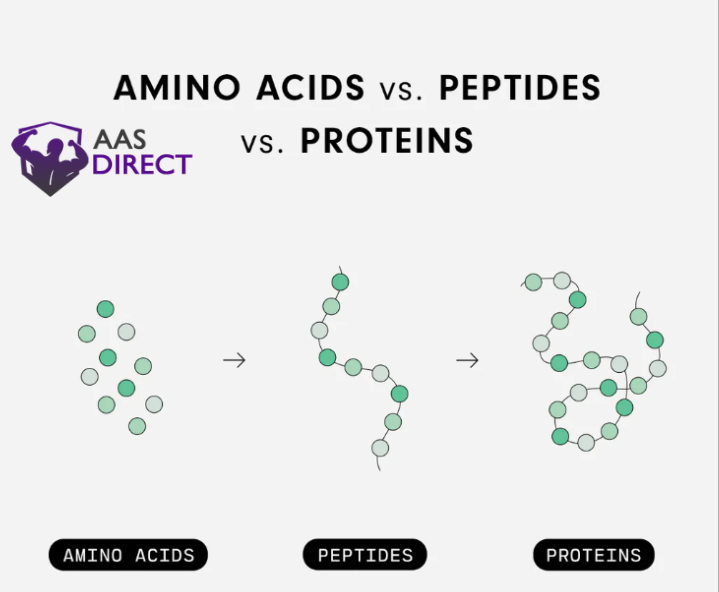
Peptides represent the essential intermediate stage between individual amino acids and complex proteins, forming when two or more amino acids link together through peptide bonds.
During peptide bond creation, your body uses dehydration synthesis to connect the amino group of one amino acid with the carboxyl group of another, releasing a water molecule in the process.
These protein building blocks range from dipeptides (two amino acids) to polypeptides containing hundreds of units.
You’ll find peptides functioning as hormones like insulin, enzymes that regulate metabolic pathways, and signaling molecules throughout your body. The specific sequence of amino acids determines each peptide’s unique function, whether it’s triggering muscle protein synthesis, regulating blood sugar, or facilitating cellular communication essential for peak health.

Short Peptides vs. Long Proteins
While both peptides and proteins consist of amino acid chains, the distinction between them lies primarily in their length and structural complexity. Short peptides typically contain 2-50 amino acids and serve specific functions like hormone signaling or cellular communication. They’re quickly absorbed and can influence muscle function and enzymatic activity rapidly.
Long proteins, containing 50+ amino acids, form complex three-dimensional structures essential for your body’s architecture. These structural proteins include collagen, actin, and myosin, which directly support tissue integrity and movement. Proteins also regulate catabolism and anabolism, controlling how your body breaks down and builds tissues.
The size difference affects their roles: peptides act as messengers and regulators, while proteins serve as structural components and major enzymes. Both contribute to maintaining proper nitrogen balance, ensuring your body efficiently utilizes amino acids for ideal physiological function.
Key Peptides That Power Your Body’s Core Functions
How do specific peptides orchestrate your body’s most crucial processes? Your body relies on key peptides to maintain critical functions through precise cellular signaling mechanisms.
Insulin and glucagon control your blood sugar through sophisticated hormone regulation, directly impacting your metabolism and energy availability. Growth hormone-releasing peptides stimulate muscle growth by triggering protein synthesis pathways necessary for tissue repair and development.
Enzymatic peptides accelerate countless biochemical reactions, from breaking down nutrients to synthesizing essential compounds. Your digestive system depends on peptide hormones like gastrin and cholecystokinin to coordinate food processing and nutrient absorption.
Meanwhile, neuropeptides regulate pain perception, mood, and cognitive function through targeted cellular signaling networks. These specialized molecules demonstrate how peptides serve as your body’s molecular messengers, ensuring seamless coordination between organs and maintaining optimal physiological performance.
Why Healthy Peptide Formation Matters For Your Well-being
When your body can’t form peptides properly, you’ll experience cascading health problems that affect everything from muscle recovery to immune function. Disrupted peptide formation compromises your body’s ability to synthesize essential proteins, leading to weakened tissue repair and reduced metabolic efficiency.
Your human physiology depends on precise peptide sequences to regulate hormones like insulin and growth factors. Without proper formation, you’ll face impaired glucose metabolism and compromised cellular communication. Branched-chain amino acids (BCAAs) become particularly vital during this process, as they directly influence muscle protein synthesis and recovery.
Additionally, faulty peptide formation disrupts neurotransmitter production, affecting your mood, cognitive function, and sleep patterns. Your immune system also suffers, as many immune responses rely on peptide-based signaling molecules to coordinate defensive actions against pathogens and inflammation.