


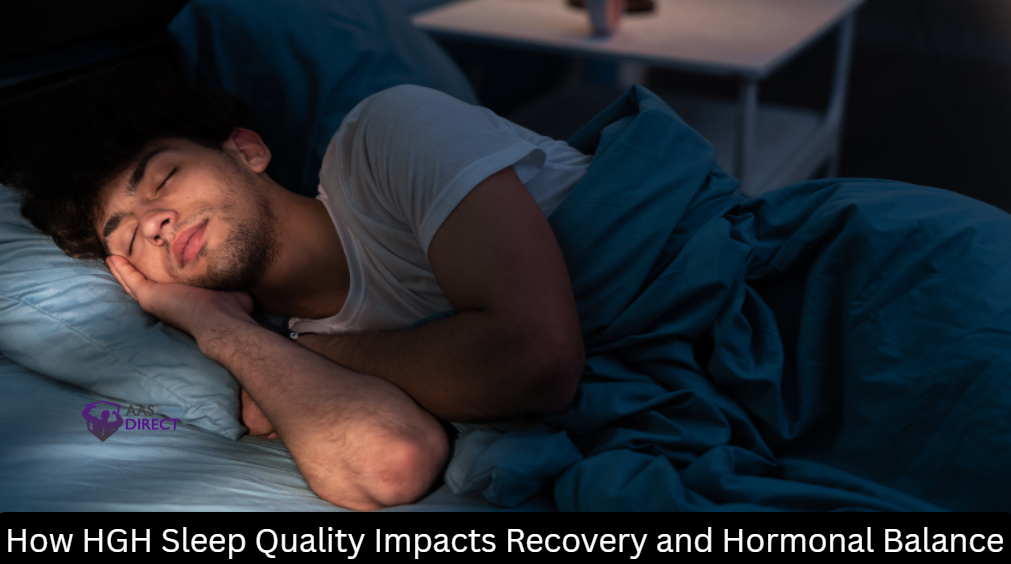
Your sleep quality directly controls how much human growth hormone your body releases each night. During deep, slow-wave sleep, your pituitary gland fires its largest HGH pulse, driving muscle repair, tissue regeneration, and overnight fat metabolism.
Poor sleep fragments this hormonal cascade, slowing recovery and weakening performance. Alcohol, stress, and irregular schedules all blunt your natural HGH output. If you want to optimize your hormonal balance and recovery, what you do before bed matters more than you think.
What Actually Happens to HGH While You Sleep?
Sleep is one of the most hormonally active periods of your day. When you drift into deep, slow-wave sleep, your pituitary gland releases the largest pulse of human growth hormone your body produces in a 24-hour cycle. Growth hormone secretion is tightly synchronized with sleep architecture and your circadian rhythm. If your sleep quality suffers, so does this hormonal window.
Poor or fragmented sleep can blunt that natural pulse, disrupting recovery at the cellular level. Your muscles repair, tissues rebuild, and energy systems restore largely because of what’s happening hormonally while you sleep. Maintaining hormonal balance starts with understanding that consistent, high-quality sleep is foundational to how your body actually recovers.

How Poor Sleep Quality Disrupts HGH Production
When your sleep is fragmented, shortened, or consistently poor in quality, the hormonal cascade that depends on it begins to break down. Without adequate slow-wave sleep, your body loses its primary window for growth hormone release during sleep. Alcohol, chronic stress, irregular schedules, and excessive training can all suppress this process by disrupting your circadian rhythm and interfering with normal sleep architecture.
The consequences extend beyond HGH alone. Your broader endocrine system relies on consistent, restorative sleep to regulate multiple hormones simultaneously. When sleep quality and hormones fall out of sync, recovery slows, performance declines, and immune function weakens.
You can’t compensate for poor sleep through other means. Protecting your sleep architecture is one of the most direct ways to support natural hormonal function.
How HGH Sleep Quality Directly Affects Muscle Recovery
When your sleep quality is high, your hypothalamus signals the pituitary gland to release human growth hormone during deep sleep stages. This hormone drives tissue repair, muscle protein synthesis, and cellular regeneration. If your circadian rhythm is misaligned or your sleep is fragmented, that hormonal release is blunted, leaving your muscles without the recovery signals they need. You’ll likely notice slower progress, persistent soreness, and reduced performance.
Prioritizing consistent, uninterrupted sleep is giving your body the hormonal environment it needs to rebuild effectively. Without quality sleep, even the most structured training program will produce diminishing returns.
How HGH Sleep Quality Drives Fat Metabolism Overnight
Beyond muscle repair, sleep quality also shapes how your body handles fat metabolism. Growth hormone plays a central role in that process too. During deep sleep and growth hormone release, your body shifts toward using stored fat as a primary energy source rather than breaking down muscle tissue. This is one of the more significant hgh recovery benefits that gets overlooked.
When HGH and sleep quality are both optimized, overnight fat oxidation becomes more efficient. Disrupted sleep interferes with circadian rhythm and endocrine function, reducing GH output and pushing your metabolism in the wrong direction.

Nightly Habits That Maximize HGH Release While You Sleep
Since your body releases the majority of its growth hormone during the first few hours of sleep, the habits you build before bed directly determine how much HGH you’re actually getting. Your pituitary gland responds to consistent sleep timing, so going to bed at the same hour each night strengthens the hormonal signal that triggers release.
To support human growth hormone and sleep alignment, avoid eating large meals, alcohol, or high-sugar foods close to bedtime, as insulin activity suppresses secretion. Keep your room dark and cool, limit screen exposure, and manage evening stress through light stretching or breathing exercises.
These practical steps protect HGH hormonal balance by preserving deep sleep architecture, which is where most of your overnight hormonal recovery actually happens.