


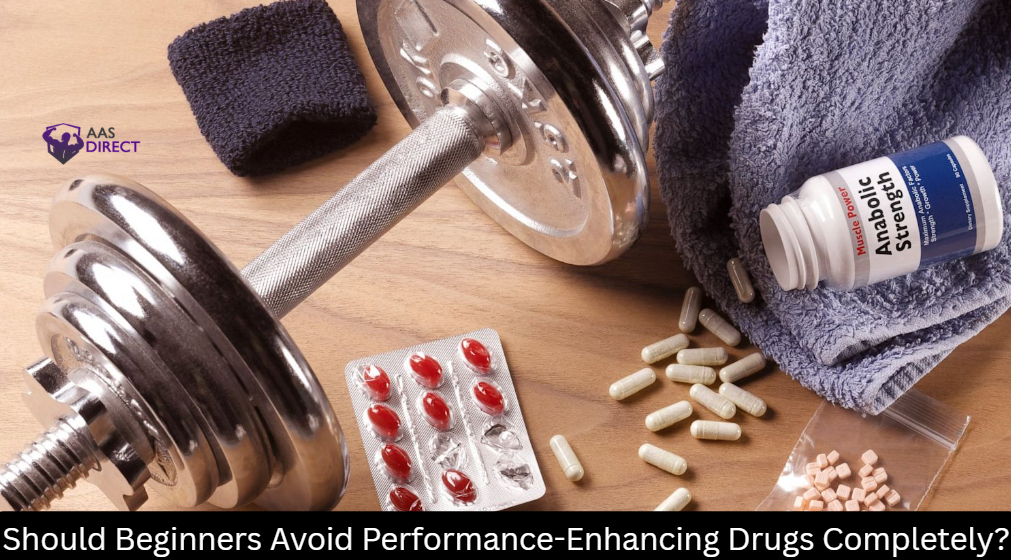
As a beginner, you should avoid performance-enhancing drugs completely. Your body’s already primed for rapid neuromuscular adaptations, meaning you’ll gain muscle faster now than at any other training stage. PEDs carry real health risks, including cardiovascular strain and hormonal disruption, and your underdeveloped physiological baseline makes spotting dangerous side effects much harder. You’re leaving serious natural gains on the table before even optimizing nutrition and programming.
Why Beginners Already Gain More Without PEDs
When you first start lifting, your body responds to resistance training with a level of adaptation that experienced lifters simply can’t replicate, regardless of what they’re taking. This is why beginners often have significant natural progress potential that’s frequently underestimated.
Early neuromuscular adaptations drive rapid strength gains, while muscle tissue responds aggressively to a new stimulus. Natural muscle growth during this phase can be substantial without any chemical assistance.
Limited training experience also means your nutrition, programming, and recovery likely aren’t optimized yet, leaving considerable room for improvement. Common reasons beginners consider performance-enhancing drugs often involve impatience, but the results you’re chasing may already be within reach naturally. Setting realistic expectations about this window of accelerated progress can help you use it effectively before it narrows.

Could PEDs Ever Make Sense for a Beginner?
Honestly, the risk-benefit analysis rarely favors it. Your natural training potential during the beginner phase is at its highest, meaning drugs offer comparatively little additional benefit while carrying real health risks.
Cardiovascular strain, hormonal disruption, and psychological dependence are concerns that don’t disappear simply because you’re young or feel healthy. Beginner bodybuilding safety depends on building a foundation you can actually evaluate and sustain. Without understanding how your body responds to training naturally, you can’t accurately measure what any substance is doing. That uncertainty alone makes early use difficult to justify for most people.
What PEDs Actually Do to an Underdeveloped Body
Introducing performance-enhancing drugs into an underdeveloped body doesn’t just accelerate growth. It forces physiological systems that aren’t yet fully mature to handle stressors they’re not prepared for.
When you consider steroid use for beginners, hormonal signaling, cardiovascular function, and endocrine regulation are all affected before you’ve even established a baseline through natural training. Muscle hypertrophy driven by drugs can outpace tendon and connective tissue development, increasing injury risk considerably.
Performance-enhancing drug risks are also harder to detect early because you may attribute side effects to normal training fatigue. Beginner bodybuilding drugs interfere with systems still adapting to resistance training itself. Your body hasn’t yet revealed what it’s capable of naturally, making drug intervention premature and potentially harmful.
Which Risks Hit Beginners Harder Than Advanced Athletes?
Beginners face a distinct risk profile with performance-enhancing drugs because you haven’t yet established the physiological baseline that helps advanced athletes recognize what’s normal and what isn’t. When you’re still early in strength development, separating drug-induced side effects from normal training responses becomes genuinely difficult.
Advanced athletes have years of data about their own bodies, so hormonal shifts, cardiovascular changes, or mood disturbances stand out clearly. You don’t have that reference point yet.

Your endocrine system is also more sensitive to disruption before it’s been conditioned through prolonged training stress. Health risks like suppressed testosterone production or elevated blood pressure can develop quietly without obvious warning signs.
Beginners often misread these signals as progress, making performance-enhancing drugs particularly dangerous precisely when you lack the experience to evaluate what’s happening.
What Foundations to Build Before Performance Drugs
Before considering performance-enhancing drugs, you’ll get far more out of building foundations that most beginners haven’t yet optimized. Structured resistance training, consistent nutrition, adequate sleep, and disciplined recovery can produce substantial progress on their own. Progress that’s often mistakenly attributed to PEDs when beginners and performance-enhancing drugs are introduced too early.
Should beginners use PEDs? Not before mastering technique, progressive overload, and protein intake. These fundamentals shape how your body responds long-term and help you accurately read training adaptations.
Understanding performance enhancement risks also requires experience. Without a training baseline, you can’t distinguish genuine drug effects from normal beginner gains or recognize early PED side effects. Building that foundation first gives you the context needed to make genuinely informed decisions later.